On 22 May 2026, the Ministry of Health and Family Welfare reported more than 100 crore health records linked with ABHA under ABDM. The announcement also reported over 450 integrated public and private health technology solutions. These are figures from that announcement, rather than a live count.
For an independent clinic, the practical question is how a record created today can remain useful when the patient next visits another provider. Our view is that this milestone makes everyday record quality a more useful focus than simply adding a health ID field to a registration form.
Linked records are different from people enrolled
The headline counts health records, not unique patients or consultations. A person can accumulate several records over time. It also does not establish that every clinic can exchange every type of document. Ask about the specific workflow and document types supported rather than treating an adoption figure as a guarantee of interoperability.
Separate identity, record linking and permission to share
ABHA provides a digital health identity. Associating that identity with a local patient, linking records and retrieving records from another provider are distinct tasks. A successful identity check should not be treated as blanket permission to read the patient's medical history.
The government's ABHA explainer describes patient choice over which records are shared and explains that clinical records remain with their source providers in a federated model. Staff should be able to explain what a particular step will do before asking the patient to complete it.
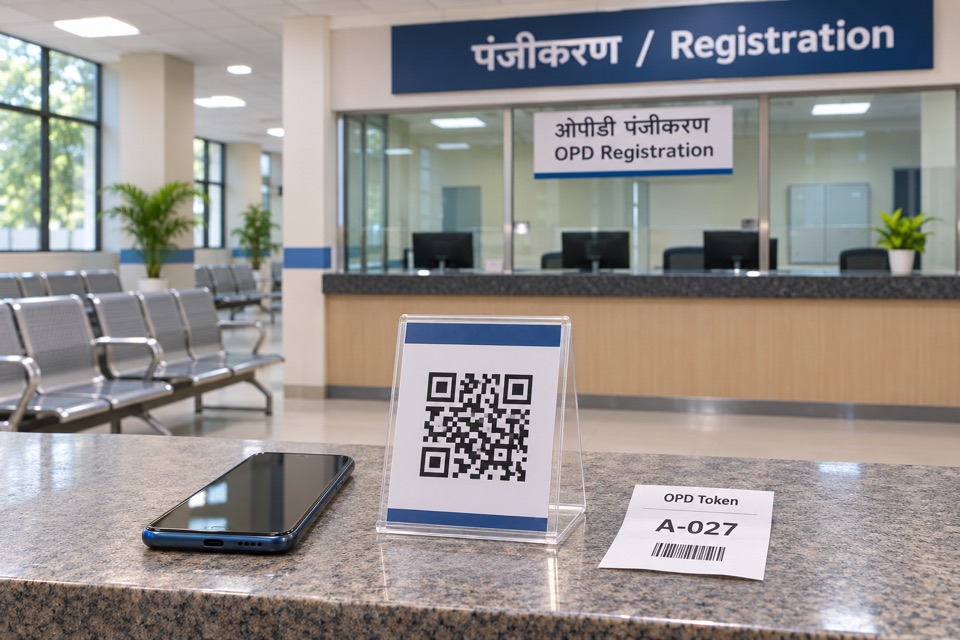
Prepare the registration desk for identity review
A useful workflow lets staff review the returned identity with the patient before associating it with an existing local record. A shared mobile number, a spelling variation or an older demographic detail deserves attention; none should silently merge two patient histories.
Keep the clinic's local patient identifier clear throughout this process. Teams should also practise what happens when verification cannot be completed, so an integration failure has an understood operational response.
Make the clinical record worth exchanging
A receiving clinician needs to understand who created a document, which encounter it belongs to and what was recorded. Clear medication instructions, identifiable lab tests, units and dates make that possible. Structured fields help preserve that context when a document moves between systems.
This is where the everyday EMR matters. Consistent data entry and appropriate clinical terminology give exchange workflows better source material. Our guide to coded clinical data explains the different jobs of LOINC, ICD-10 and SNOMED CT.
Questions to ask in an ABDM software demo
Ask the vendor to demonstrate identity association, record linking and consent-based retrieval separately. Request the exact document types and environments supported, and ask which external onboarding or assessment steps remain. A demonstration in a test environment should be identified as such.
Then explore the less tidy cases: a patient declines sharing, the wrong local record is selected, a request expires or the provider cannot be reached. Ask how imported records show their source and how access follows the consent lifecycle. These cases expose the decisions that staff will face during a busy session.
Where should a clinic start?
Start by reviewing registration, documentation and patient communication as one connected workflow. Make identifiers consistent, keep records clear and train staff to explain each sharing step. That preparation remains useful as digital health exchange grows.
For a foundation before evaluating vendors, read ABDM explained for Indian clinics. To connect these questions to daily documentation, see our overview of EMR software for Indian practices.