EMR software for Indian doctors, with the notes drafted for you
An electronic medical record only helps if it is quicker than the pad it replaces. Thravi’s EMR follows the order of a consultation, codes what you write as you write it, and can draft the whole note from the conversation for you to approve.
Built around the consultation, not around the database
What a doctor does in a visit, in the order they do it, with the paperwork taken out.
The visit in one screen
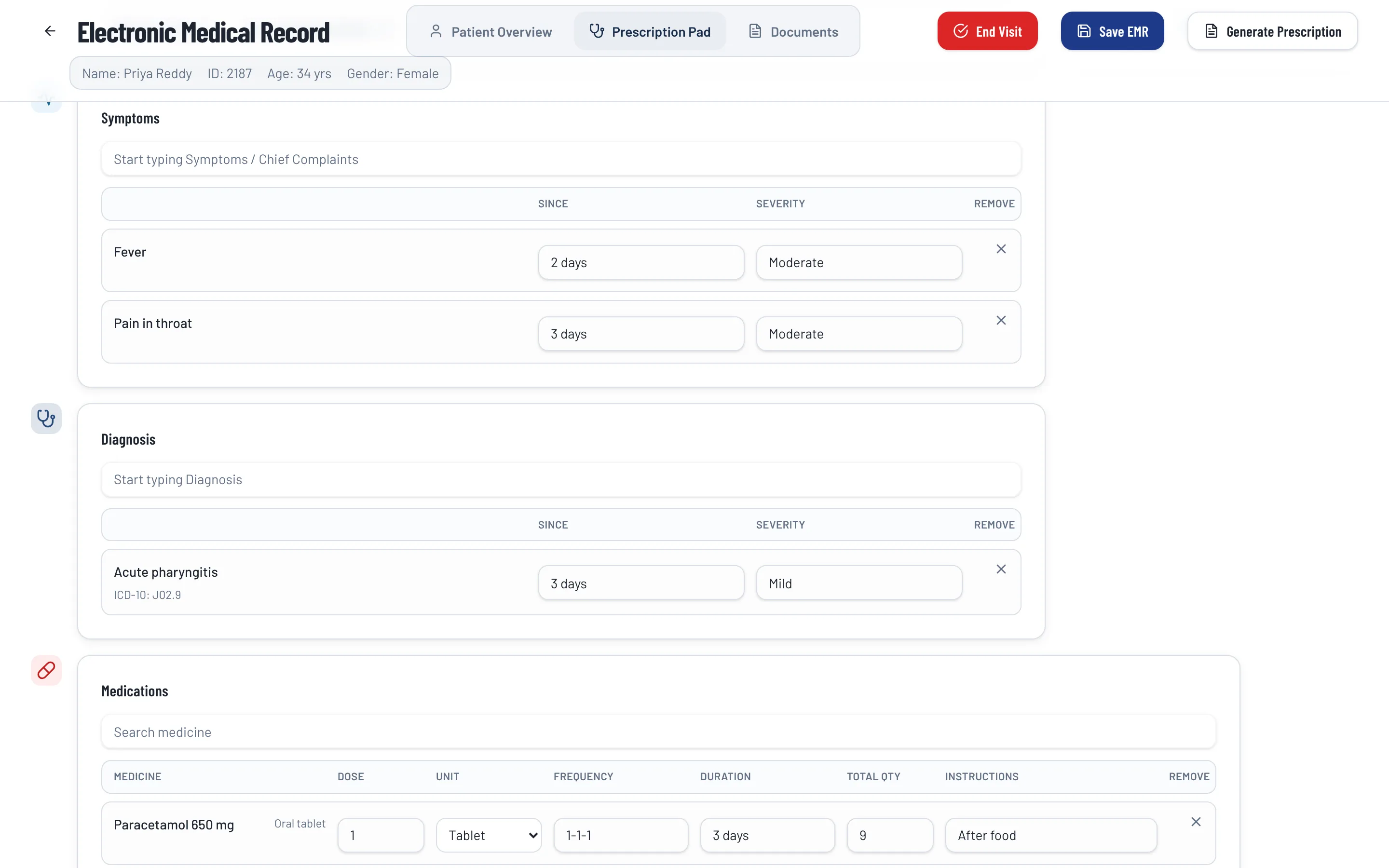
Vitals, medical history, symptoms, diagnosis, investigations, medicines, notes and follow-up on one prescription pad, with the patient’s documents and overview one tab away.
Search that returns the coded term
Type a symptom, a diagnosis or a brand name and pick from SNOMED CT, ICD-10 and India’s NRCeS drug master, synonyms included. You choose a concept, not a spelling.
Prescriptions with structure
Dose, unit, frequency, duration, quantity and instructions are separate fields, so the pharmacy can dispense from the prescription without interpreting a line of text.
Previous visits, one click away
Earlier consultations open beside the current one. Any section of a past visit can be copied forward and edited, which is most of the work in a follow-up.
Your own vitals and your own letterhead
Each doctor chooses which vitals appear and in what order. Prescriptions print on your hospital’s template, and the letterhead can be built from a photo of your existing pad.
Sent to the patient’s phone
The prescription goes to the patient by WhatsApp or SMS, and a follow-up reminder with a booking link goes out the day before they are due.
An AI scribe that writes into the EMR, not beside it
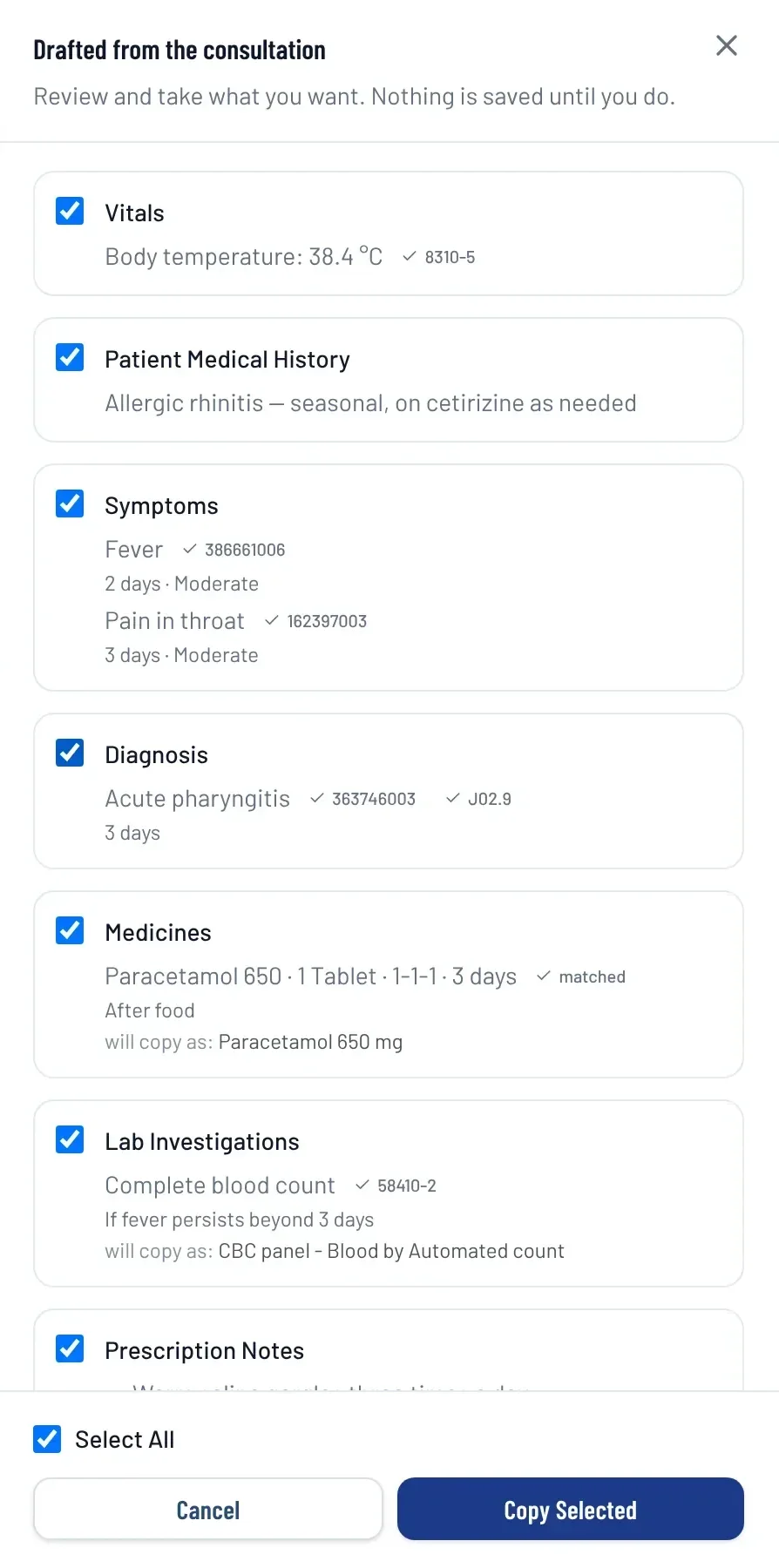
Record the consultation in English, Hindi or Telugu, or upload audio. Thravi transcribes it and drafts symptoms, examination, diagnosis, investigations, prescription and follow-up, each matched to the same coded entry the search box would give you.
The draft arrives as suggestions with checkboxes. You tick what to keep and copy it into the form; nothing is saved before that. Wording with no confident match is kept as plain text, never rounded to the nearest code. More on Thravi’s AI.
English, Hindi and Telugu, chosen before recording
Corrections such as “500, no, 650 mg” are kept as said
The doctor reviews every suggestion before it is saved
The scribe’s draft, ready for review inside the consultation screen. A screenshot from the product, with demo data.
Coded records that other systems can read
Free text is easy to write and impossible to use: two doctors spell the same diagnosis three ways and no report can count it. Coding at the point of entry means a diagnosis carries its ICD-10 code, a medicine its drug-master entry and a test its code from the first visit.
That is also what makes a record portable. Thravi is ABDM integration ready, built for ABHA-linked records and FHIR-based exchange, implemented in line with the applicable sandbox and certification requirements. Why coded clinical data matters.
Symptoms and findings in SNOMED CT
Diagnoses with ICD-10
Medicines from India’s NRCeS drug master
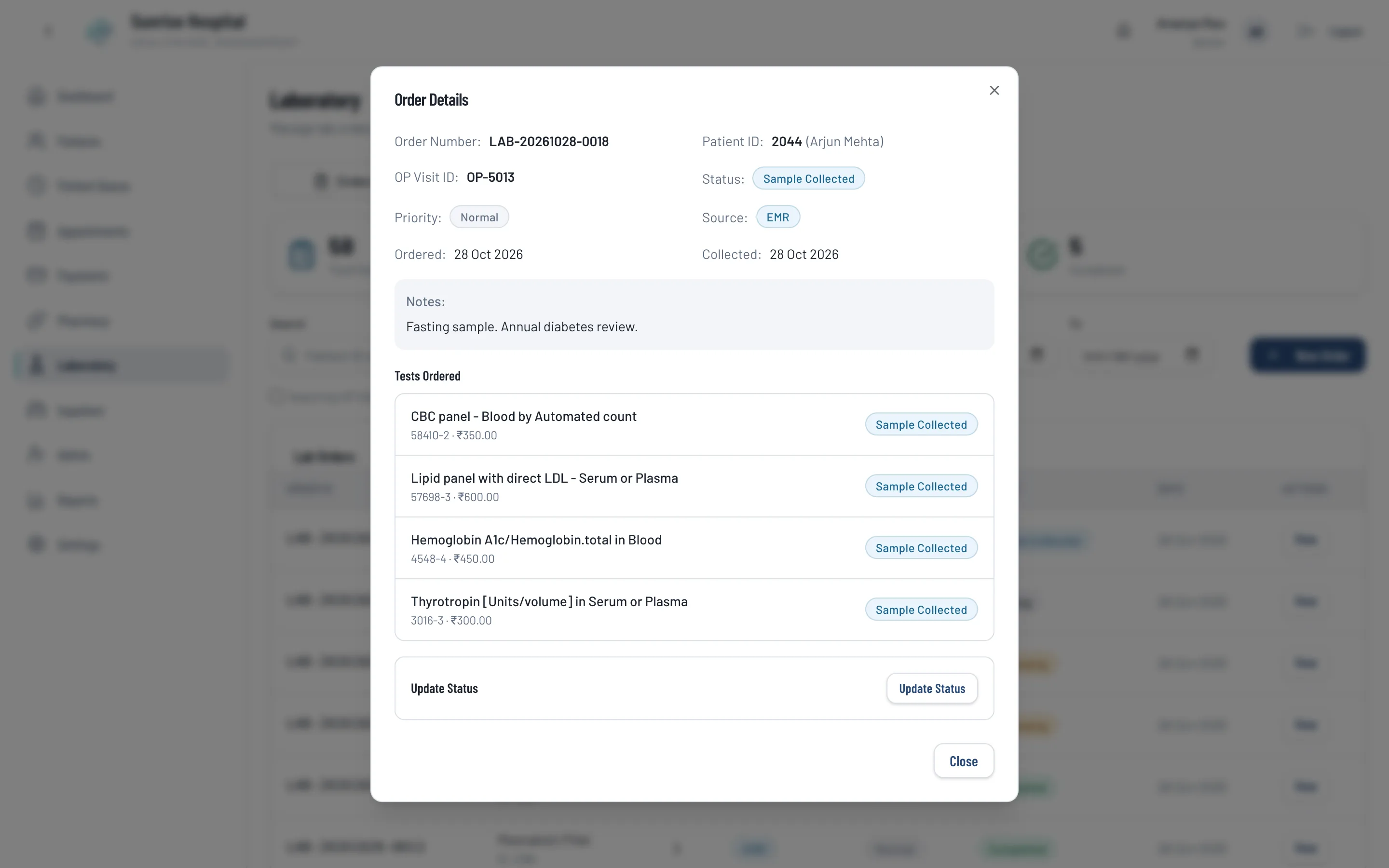
A lab order raised from the consultation, with each test coded and priced. A screenshot from the product, with demo data.
Getting started, or moving over
Moving from paper to an EMR
Start with the fields you already write on the pad and let the search do the coding. Reception registers the patient and the queue brings them to your screen; you do not need the lab or pharmacy modules to begin. Why a growing clinic needs an EMR.
Replacing another EMR
Ask us in the demo what your current EMR can export. We will tell you before you commit what can be brought across and what cannot. Your prescription layout and letterhead can be set up to match what patients already recognise.
EMR software holds the clinical record: what the doctor found, diagnosed and prescribed in each visit. Hospital management software also runs registration, queues, billing, lab, pharmacy and inpatient care. Thravi includes the EMR as part of its core, so the clinical record and the operations share one patient record.
No. Symptoms, diagnoses and medicines are picked from a search as you type a few letters, earlier visits can be copied forward, and the AI scribe can draft the whole note from the recorded consultation for you to review.
SNOMED CT for symptoms, findings and diagnoses, ICD-10 for diagnoses, and India’s NRCeS drug master for medicines. Lab tests are coded to LOINC in the laboratory module.
Yes. Prescriptions, lab reports and bills use your hospital’s document template. The letterhead can be created from a phone photo of your existing stationery, or documents can be printed on pre-printed paper.
Not yet. Medicines are coded against the drug master, which is what such checks need, and interaction and allergy warnings are in development.
The EMR is ABDM integration ready. Because each visit is stored as coded, structured data, it is shaped for linking to a patient’s ABHA and for consent-based sharing as FHIR records. Those ABDM capabilities are being implemented in line with the sandbox and certification requirements, so ask us where they stand when you book a demo.
Book a personalised demo
Tell us how your facility operates, and we’ll show you how Thravi can be configured for your setup.